Follow us


Description: This is Part 8 of the "Assembly Language Primer for Hackers" video series. Please begin here, by watching Part 1, if you have not already done so. In this video we will look at how to alter the program execution flow using unconditional branching. We will look at how to use the JMP instruction to make an unconditional branching to a new location in the code segment and how to use the CALL statement in conjunction with RET to save the program execution state. We will demonstrate all the concepts using very simple code snippets to aid understanding. <br><br>Please download UnconditionalBranching.s to try out the various exercises discussed in this video. <br><br><style type="text/css">body { bac </style> </div>
Tags: programming ,
Disclaimer: We are a infosec video aggregator and this video is linked from an external website. The original author may be different from the user re-posting/linking it here. Please do not assume the authors to be same without verifying.
Comments:
Login to post a comment

-
 Defeating Getimagesize() Checks In File Uploads
-
 Challenge 6: Digest Authentication Reloaded
-
 Challenge 5: Digest Authentication Attack
-
 Basic Authentication And Form Bruteforcing
-
 Http Basic Authentication Attack (Easy)
-
 Challenge 2: Http Form Attacks Reloaded
-
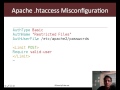 Http Verb Tampering Demo
-
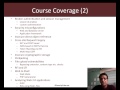 Web Application Pentesting Course Introduction
-
 Introducing Pentester Academy
-
 Hack Of The Day 13: Remote Shellcode Launcher: Testing Shellcode Over A Network
-
 Hack Of The Day 12: Pivots And Port Forwards In Scenario Based Pentesting
-
 Hack Of The Day: Customizing Shellcode For Fun And Profit
-
 Hack Of The Day: How Do I Run Untrusted Shellcode?
-
 Securitytube Linux Assembly Expert Exam Format
-
 [Slae] Writing An Custom Insertion Encoder
-
 [Slae] Execve Shellcode Stack Method
-
 [Slae] Shellcoding Basics
-
 [Slae] Using Libc And Nasm
-
 [Slae] Hello World In Assembly Language
-
 [Slae] What Is Assembly Language?

Another great vid, I always thought assembly would be really hard but you break it down and make it so easy to learn! I'm sad I'm almost at the end of this video series!
@cr1tt3r :) We also have the "Assembly Primer for Hacker Windows Series"
http://www.securitytube.net/groups?operation=view&groupId=6
and the very new "Exploit Programming Megaprimer" which builds on the assembly language you know:
http://www.securitytube.net/groups?operation=view&groupId=7
Check them out when you get time, you may find them interesting.
first thanks for the great series
i want to ask why did you use .asciz instead of .ascii ?
.asciz just adds the \0 null character at the end by default.
Great video.
How does the RET return to where the call occurred? Is there some registers that holds a pointer to that location after a CALL occurs?
I have to say that i have gon through a lot of written assembly tutorials and have sort of grasped things but i really appreciate the slow pace of these videos it is really helping to fill in the gaps. Thanks
As always! Another great movie! Thank you Vivek!
very informative video on unconditional branching.
thank u vivek.
very good, i think i have to review all the series because the things to remember are a lot, but Vivek your very good teacher, i'm stuck on my pc watching your lessons. thank you
I just wanted to thank you so much for making these videos. I have a book on the general security, hacking, etc but was struggling with parts of it. Your videos explain everything extremely clearly and I love the balance you have between the theory and the examples.
wow!!! your leture's are mag, magg, maggg , magnificent. I love them to all specially the way you teach and your way of working is very very comprehensible ............
thanx
great video like always , thanks a lot :)
Nice vids! The theory about the stack and how calls work is very useful. Thanks a lot! I'll check out all your vids ;)
Thanks for your great video series. By the by, is that possible to jump backward?
Could you please tell me why doesn't it work out?
code 1
code 2
....
jmp test1
code 15
code 17
ExitMe:
movl $1, %eax
movl $0. %ebx
int $0x80
code 18
.....
Test1:
code 25
code 26
jmp ExitMe
ohhh..Sorry! It is working perfect. That was my mistake. Anyway, thanks Mr.Vivek. I am looking forward more videos.
cant be better that that
Thank you for the great series Vivek!
This is a great way to start learning assembly.
Thank you
Awesome series!